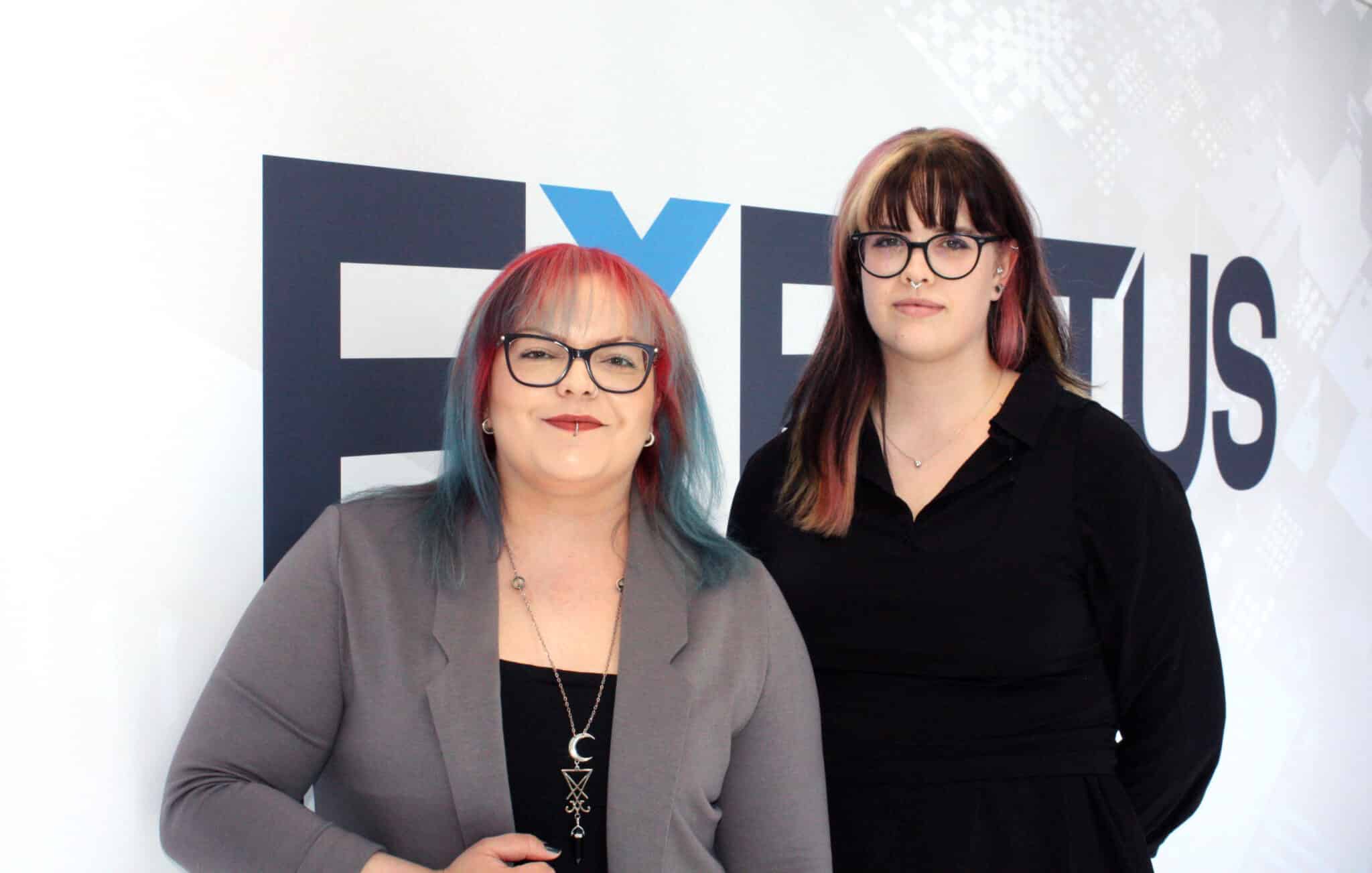
Software development is often still seen as a male-dominated field, but the industry is becoming more diverse year by year. During her work experience period (TET) at Exertus, Sofia Takaneva from Laihia Secondary School wanted to learn what it is really like to work as a software developer and how women have found their way into the industry. She interviewed two Exertus software professionals, Anna Tuominen and Iina Nikkarikoski, to hear about their career journeys, daily work, and advice for future developers.
During my work experience period (TET) in Exertus’ Marketing and Communications team, I was given the opportunity to interview two women working in software development: Anna and Iina.
Anna has been part of Exertus’ Logset team for nearly seven years, while Iina has worked as a trainee in the R&D department for just over a year while also completing her final thesis studies.
In the interview, we talked about their daily work, career paths, and how they ended up in a field that is still often seen as male-dominated. Speaking with them gave me an interesting and inspiring glimpse into the world of software development and what a programmer’s job is really like.
The Questions I Asked
- How did you become interested in coding?
- What does a typical day look like for a software developer?
- What is the most challenging part of coding?
- Is there a lot of diversity in the industry?
- How much mathematics do you need in your work?
- What skills are important in this profession?
- What do you enjoy most about your job?
- What advice would you give to someone interested in coding?
Coding Has No Gender – Two Career Stories from the IT Industry
Anna Tuominen: “I originally decided to study engineering on a complete impulse. I figured out what kind of skills I wanted to learn, researched how I could gain those skills, and then applied to study them. At the beginning of my studies, I had no plans to become a software developer, and programming courses were definitely not my main priority. However, somewhere around the middle of my studies, my interest in coding slowly started to grow. I began working on small personal projects in my free time, and that’s where the enthusiasm really started.”
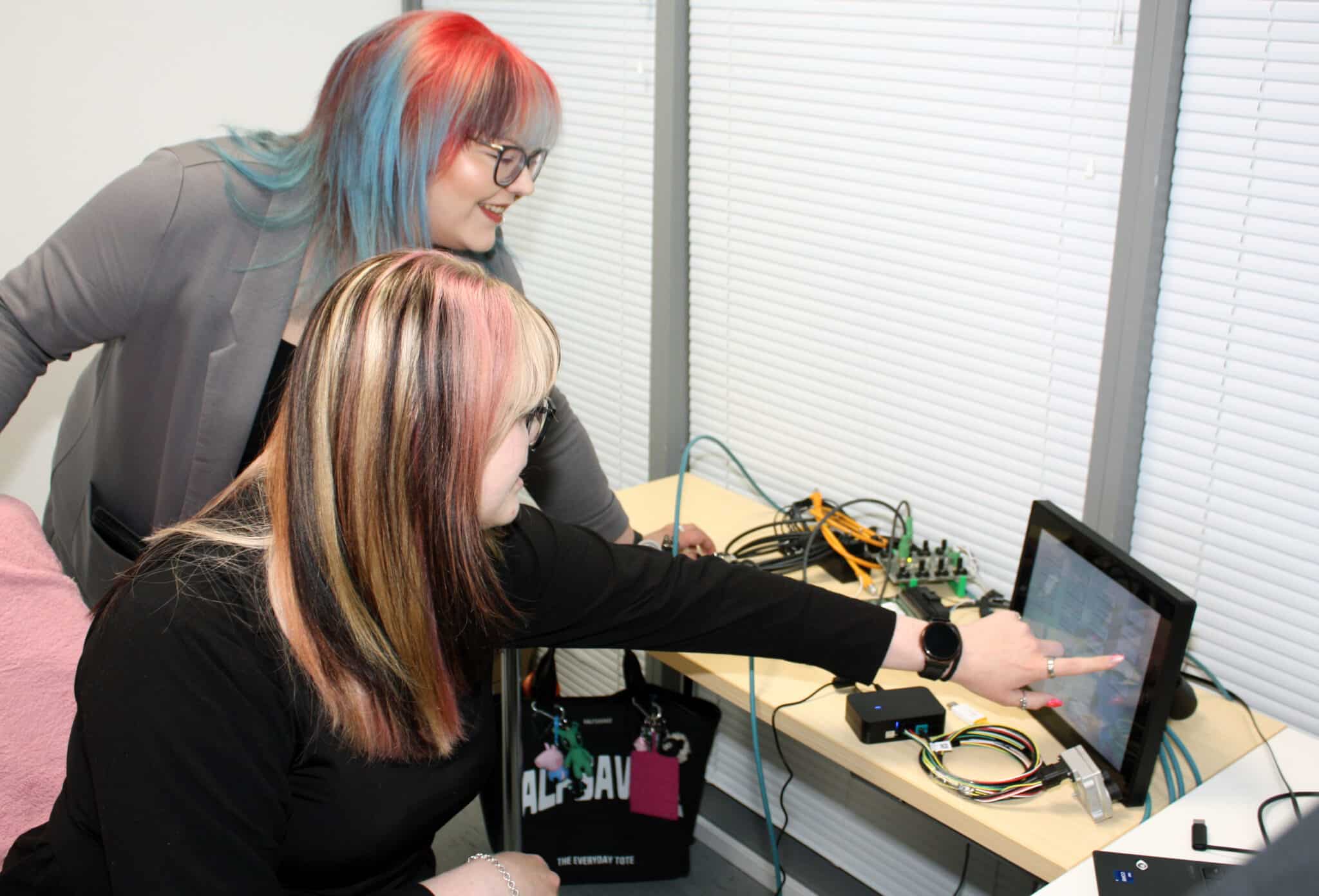
Anna explains that her work involves much more than just writing code: “I work on developing control systems for forestry machines within a customer-focused team. My days include a lot of testing, troubleshooting, discussions, customer meetings, and documentation.”
When asked about the most challenging aspect of coding, she points to complex problem-solving: “The most difficult situations are usually those where you have to follow a long chain of logic from beginning to end. It requires intense concentration and the ability to keep many different things in mind at the same time.”
Anna also sees positive changes happening in the industry: “There are still significantly more men than women working in this field, but the situation continues to improve. That’s a great thing because different people bring different perspectives and ways of thinking.”
According to Anna, advanced mathematics is not as important as many people assume: “Basic math skills and logical thinking will take you a long way.” For anyone interested in software development, she highlights the importance of curiosity and continuous learning: “You don’t need to know everything beforehand. The best way to learn is by doing. Teamwork, open communication, courage, and curiosity are all valuable skills.”
Her favorite part of the job: “The best feeling is solving a difficult problem in a good way. Especially when you’ve written code that not only works but is also clear, efficient, maintainable, and easy to read.”
Anna’s advice for beginners is encouraging: “We all started somewhere, and even the most experienced developers have written code they’re not proud of. Making mistakes is part of learning. You just have to be willing to try, learn from those mistakes, and keep improving.”
Iina Nikkarikoski: “I started my journey by creating HTML-based layouts for an online game. I found it much more interesting than simply writing text, and that’s when I realized coding could be something I’d enjoy.” She says that detailed work and precision have always appealed to her, which naturally led her toward programming.
According to Iina, no two workdays are exactly alike. “Some days we start new projects, while other days we focus on fixing bugs or investigating issues. Sometimes a problem can take days to understand, even if the final fix ends up being just a single line of code.” She laughs and adds: “You could even jokingly say that coding is sometimes just sitting and staring at a screen.”
For Iina, one of the biggest challenges at the beginning was understanding the structure of a new codebase. Today, the challenge is making improvements in the most efficient way without slowing down or negatively affecting performance. She also emphasizes how versatile coding can be: “With programming, you can create almost anything—games, applications, websites, or even software that interacts with hardware. If you can imagine it, there’s usually a way to build it.”
Like Anna, Iina believes that coding does not require advanced mathematics in most situations: “You don’t need a huge amount of math, although some projects and tasks may require more than others.” The most enjoyable part of her work is the constant challenge: “I like that coding keeps your brain active and gives you interesting problems to solve.”
She highlights logical thinking, problem-solving skills, and English language skills as especially important, since most programming languages, documentation, and tools are based on English. Her message to anyone considering a career in coding is simple: “Don’t worry if you have no previous experience. You can start learning coding at university or college and still do very well. Everyone has to start somewhere.”
Sofia’s Final Thoughts
My work experience period in Exertus’ Marketing and Communications team gave me valuable insights into both working life and content creation.
It was exciting to conduct a real interview and write an article about a topic I had never explored in such detail before. I also learned how artificial intelligence tools, such as ChatGPT, can support brainstorming, editing, and refining content as part of modern communications work.
Overall, this project gave me a great understanding of how diverse and interesting the fields of marketing and communications can be.
- News