A mobile machine control system is only as strong as its user interface. When the HMI fails, the entire machine experience, usability, and in the worst-case safety suffer and every delay in integration shows up directly in time-to-market.
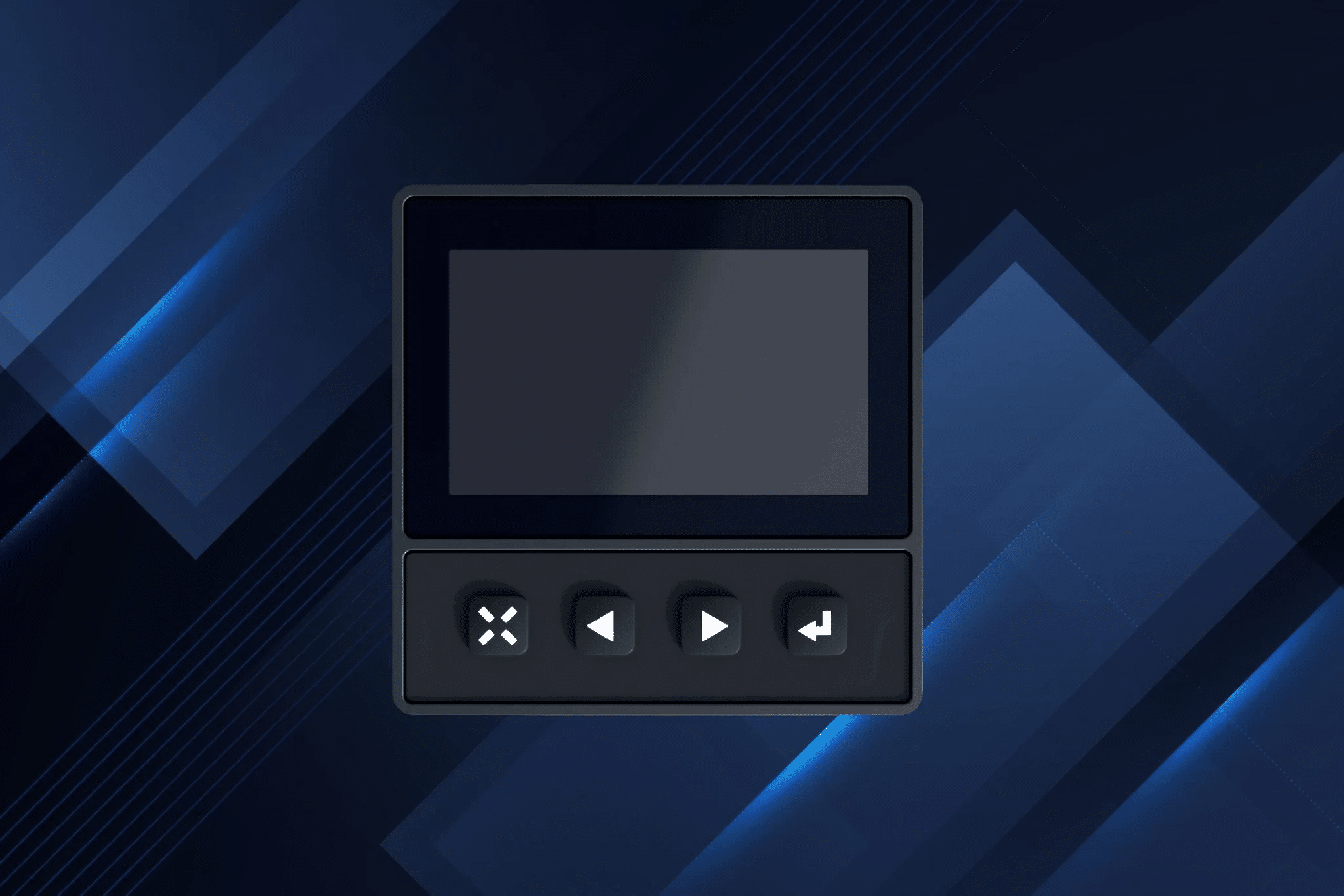
CDC1430 CAN Display Unit is Exertus’ new 4.3” CAN display (rugged HMI) designed for demanding off-highway environments and fast system integration. In this article, we cover who the CDC1430 is for, what it solves, and how its features translate into practical benefits for OEMs and integrators.
Who is the CDC1430 built for?
CDC1430 is targeted especially at:
- Mobile machinery OEMs modernizing their control system
- CTO / R&D Director roles responsible for architecture, cost pressure, and product development lead time
- Senior engineers and system architects who want a flexible, technically transparent integration without a “black box”
- Integrators delivering complete systems who need a repeatable, configurable HMI platform
A typical starting point: the machine has an aging display/HMI, relay control, or a distributed solution whose maintenance and development are slowing down—and the system needs an update without unnecessary licensing or vendor-lock risks.
The problem: the HMI cannot be the bottleneck
Common HMI challenges repeat from one project to the next:
1) Reliability and readability in harsh conditions
In off-highway machines, the display faces vibration, temperature variation, moisture, and dirt. Weak optical construction shows up quickly: reflections, fogging, and mechanical stress degrade usability.
2) Slow integration and uncertain toolchains
HMI commissioning drags on when:
bus settings, I/O, and configurations require extensive manual work
diagnostics are cumbersome
the development environment forces licensing or a rigid process
3) I/O requirements change at the last minute
In machine projects, the “last mile” is often where changes accumulate: an extra button, a new sensor, a warning lamp, an added function. If the HMI is not flexible at the I/O level, changes spread into a broader redesign.
4) Connectivity: remote diagnostics, commissioning, and service
Wi‑Fi/BLE is not “nice-to-have” when the goal is fast commissioning, configuration, and service support. Without proper connectivity, troubleshooting falls back to the “go on-site and try” model.
CDC1430: key features (and why they matter)
CDC1430 combines rugged construction, bus technology, and practical integration advantages.
Optically bonded display: improved readability and durability
CDC1430 has an optically bonded structure and 480 × 272 resolution in the 4.3” size class.
What does this mean in practice?
better readability under varying lighting conditions
fewer reflections and less “air gap” between display layers
Evolved: enhanced durability and better operator comfort when the machine is in active use
38 configurable I/O lines: flexibility for “last mile” changes
CDC1430 provides 38 configurable I/O lines.
Benefit for OEMs and integrators:
easier to fit the HMI to the machine implementation without a separate I/O solution for small expansions
changes don’t force a full redesign of the electrical/control architecture
enables clearer variant management (same display, different configuration)
Wi‑Fi & BLE: faster commissioning, configuration, and service
CDC1430 includes Wi‑Fi & BLE connectivity.
What is this typically used for?
speeding up service and support cases
configuration and smoother commissioning
potential mobile tools and local connectivity at the machine
Dual CAN-FD capable bus interfaces: ready for a modern CAN architecture
CDC1430 supports dual CAN-FD capable bus interfaces.
Why is this important?
CAN-FD enables larger payloads and more efficient bus traffic compared to classic CAN
a dual-bus architecture supports segmentation, expansion, and a clearer system structure
supports future software and diagnostic needs as the system grows
What this changes in development: time-to-market in practice
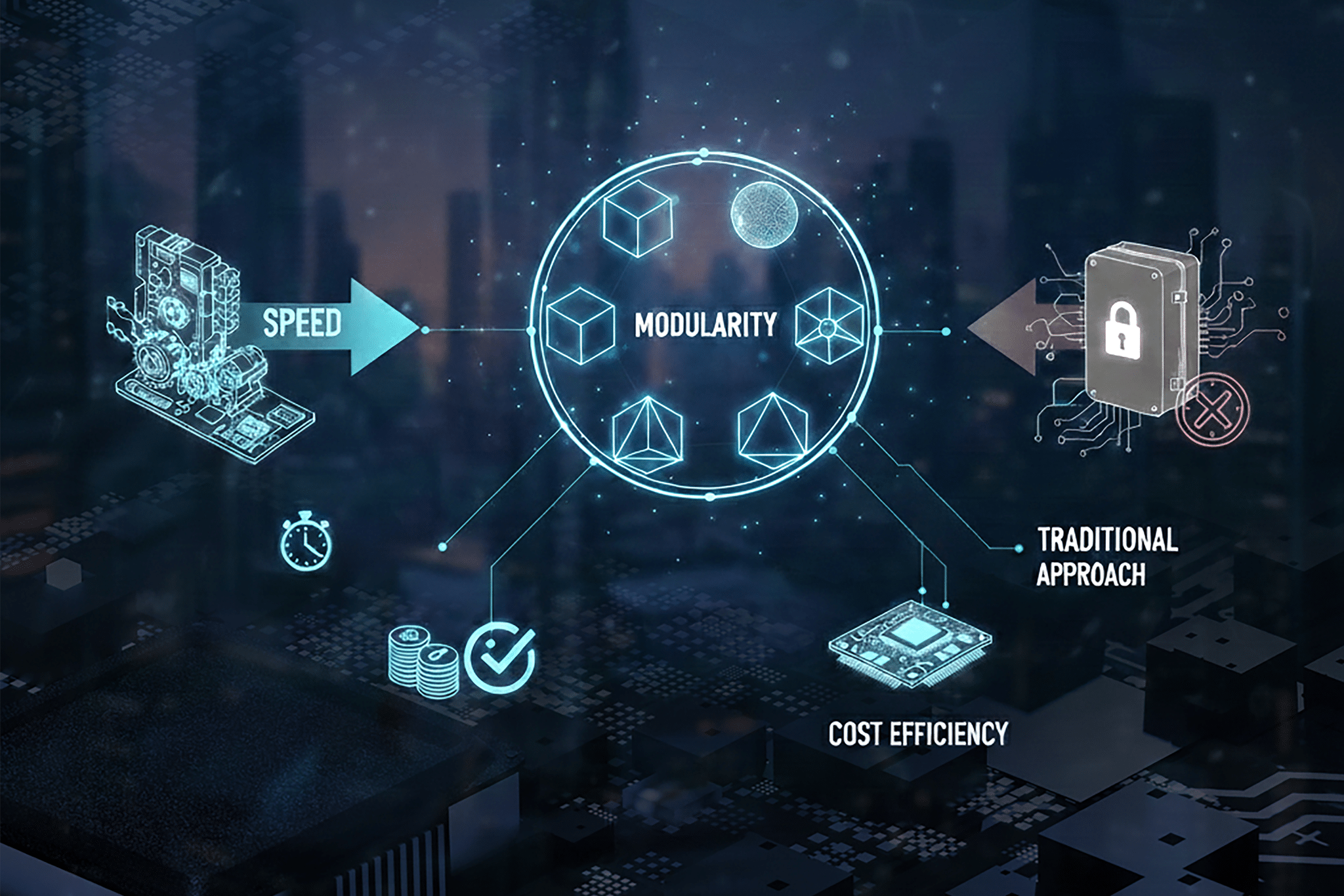
CDC1430 is not just a new display—it’s part of the goal Exertus summarizes as Freedom to Create: less friction, more control in development.
Concretely, this shows up in three areas:
- Faster integration
– purpose-built features (CAN / CAN‑FD, I/O, connectivity) reduce the need for separate solutions - Fewer compromises in hardware selection
– when the display is flexible in I/O and bus architecture, machine design doesn’t end up being driven by “display constraints” - Better maintainability and lifecycle management
– connectivity + bus diagnostics + modular thinking support long-lifecycle machines where development doesn’t stop at delivery
Use cases: where the CDC1430 stands out
Below are three typical scenarios where a rugged CAN display solution and strong I/O/connectivity capabilities pay back quickly.
1) Compact machine HMI + basic I/O in one unit
When the machine is space-constrained and you want to minimize cab electronics, the CDC1430’s compact HMI + wide I/O can replace separate small modules and simplify wiring.
Results:
simpler electrical architecture
fewer components and connectors
easier assembly in production
2) Modernization project: replace the old display, be CAN-FD-ready for what’s next
In legacy systems, the HMI is often the “anchor” that slows the move to a new bus architecture. The CDC1430’s dual CAN-FD helps build a path toward a more modern system without having to replace everything at once.
Results:
controlled transition with lower risk
better foundation for future features and data
fewer “temporary hacks”
3) Integrator delivery model: same base display, different machine variants
For an integrator, repeatability is critical. When the same rugged HMI can be adapted to different configurations by configuring I/O lines and managing CAN buses, variant management becomes lighter.
Results:
faster project throughput
less custom hardware per project
clearer documentation and maintenance
Engineer’s checklist: what to ask before selecting a CAN display
If you are selecting a display for an off-highway machine, at least go through the following:
- Do you need CAN-FD now or within 2–5 years?
- How much I/O do you want on the HMI (and what typically changes late in the project)?
- Is an optically bonded structure required for readability and durability?
- Do you need Wi‑Fi/BLE for commissioning, service, or diagnostics?
- How do you ensure the HMI doesn’t lock you into specific licenses or rigid toolchains?
- What is the target time-to-market, and what should be simplified during integration?
Summary: a rugged HMI built for integration
CDC1430 CAN Display Unit is designed for situations where the HMI must be:
- durable and readable (optically bonded)
- flexible at the I/O level (38 configurable I/O lines)
- ready for a modern CAN architecture (dual CAN-FD capable bus interfaces)
- able to accelerate commissioning and support (Wi‑Fi & BLE)
If your goal is to bring a mobile machine control system into production faster and build a foundation for future capabilities, CDC1430 is built for exactly that.
Book a demo / Schedule a technical sparring
Want to see the CDC1430 in practice and spar on how it fits your machine architecture (CAN, CAN‑FD, I/O, commissioning, diagnostics)?
Book a demo or schedule a technical sparring with an Exertus expert:
Contact us form or contact sales: sales@exertus.fi